
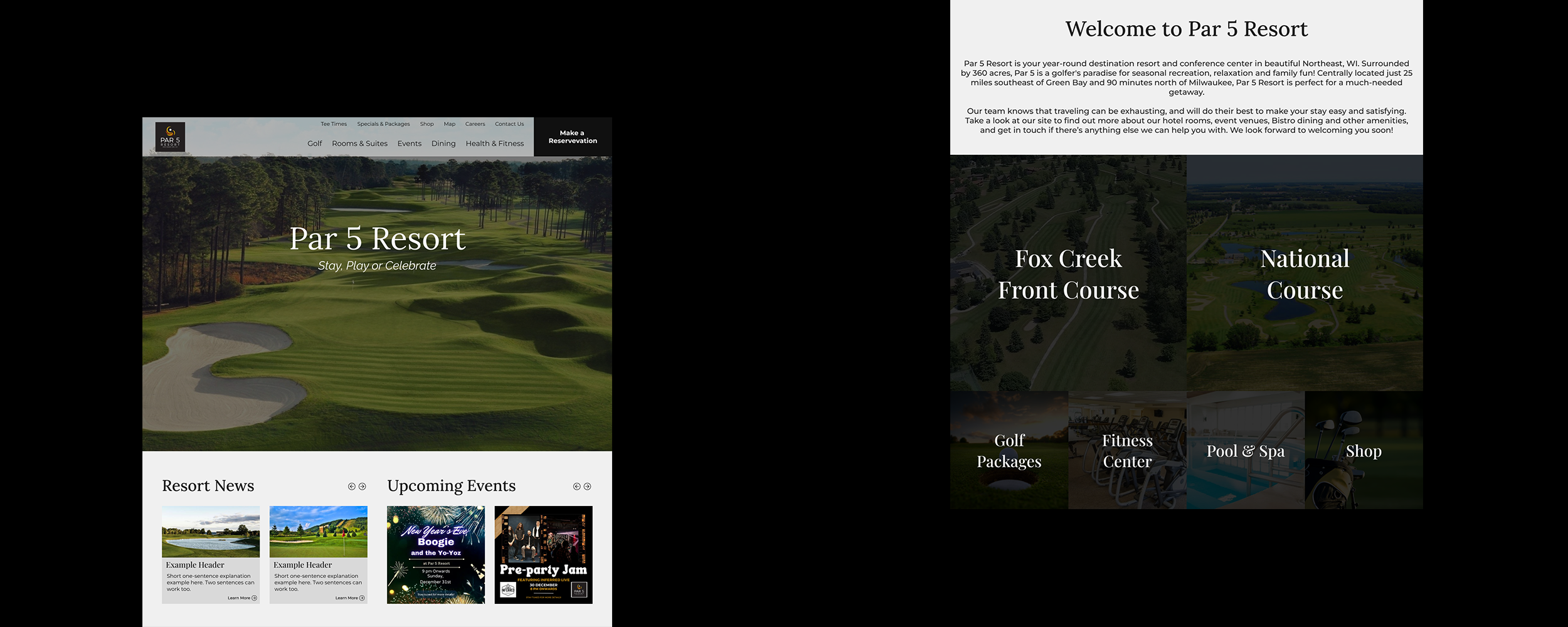
Redefining our brand to our customers, one webpage at a time.
Par 5 Resort Website Revamp
User Research • Visual Design • User Interface • Wireframes • Information Architecture • Mobile Optimization
Problem
Par 5 Resort’s website lacked core functionality expected of modern hospitality platforms. The site was not fully responsive, did not support direct bookings, and relied heavily on phone calls and third-party services for reservations, events, and purchases.
This created friction for users, limited conversion tracking, and weakened the resort’s ability to control the guest experience end-to-end.
Role: Solo UX Researcher & UX Designer
Timeline: December 2023 – Present
Company: Par 5 Resort (Hospitality / Luxury Resort)
Goal
Redesign the website to:
Enable direct bookings and payments
Support events and merchandise sales on-site
Improve usability across devices
Better reflect the resort’s luxury positioning
Success meant increasing direct engagement while reducing reliance on external platforms.
My Role & Ownership
As the sole UX designer, I owned:
UX research and strategy
Information architecture
Visual design and prototyping
Conversion-focused UX decisions
Ongoing iteration and site evolution
This is a from-scratch redesign with live, evolving constraints.
UX Challenge
The existing website functioned primarily as a brochure rather than a transactional platform. Users were required to:
Call to book reservations
Use third-party services for events and tickets
Navigate unclear content to understand amenities and offerings
From a business standpoint, this limited:
Conversion visibility
User retention
Brand perception in a competitive luxury market
The challenge was to modernize the site while balancing luxury presentation with conversion efficiency.
Research & Insights
Methods
User feedback analysis from guest reviews
Interviews with past guests, potential visitors, and internal staff
Analytics review to identify drop-off points
Competitive analysis of luxury resort and golf destinations
Key Findings
The visual design felt dated and misaligned with the resort’s premium experience
The booking flow was unintuitive and intimidating
Content failed to clearly communicate the value of amenities, golf courses, and events
Users expected to complete transactions directly on the site, not via phone or third parties
Insight: The site was underselling the experience and overburdening users at the moment of conversion.
Key Design Decisions
1. Direct Transactions Over Lead Capture
Tradeoff: Traditional hospitality lead funnels vs. immediate conversion.
Decision: Enable direct payments for bookings, events, and merchandise to reduce friction and improve conversion tracking.
2. Conversion-First Information Architecture
Tradeoff: Aesthetic storytelling vs. usability.
Decision: Structure pages around clear user goals—book, attend, explore—while maintaining a luxury visual tone.
3. Content Depth as a Conversion Tool
Tradeoff: Minimal copy vs. persuasive clarity.
Decision: Expand descriptions of amenities, golf courses, and events to support confident decision-making.
4. Platform Constraints as Design Parameters
Tradeoff: Custom development vs. platform efficiency.
Decision: Leverage Wix’s capabilities strategically, designing within constraints while maximizing flexibility and performance.
Design Solution
I redesigned the website from the ground up, introducing:
Responsive layouts across devices
Integrated booking and payment system
Event management with RSVP and ticketing
Merchandise shop for direct sales
Clear navigation and conversion pathways
This transformed the site from a static presence into an active business channel.
Visual Design
Clean, modern layouts inspired by upscale golf resorts
High-contrast color usage to guide attention
Clear visual hierarchy to support exploration and conversion
Brand-forward presentation that aligns with luxury expectations
Design decisions prioritized clarity, trust, and ease of action without sacrificing visual polish.
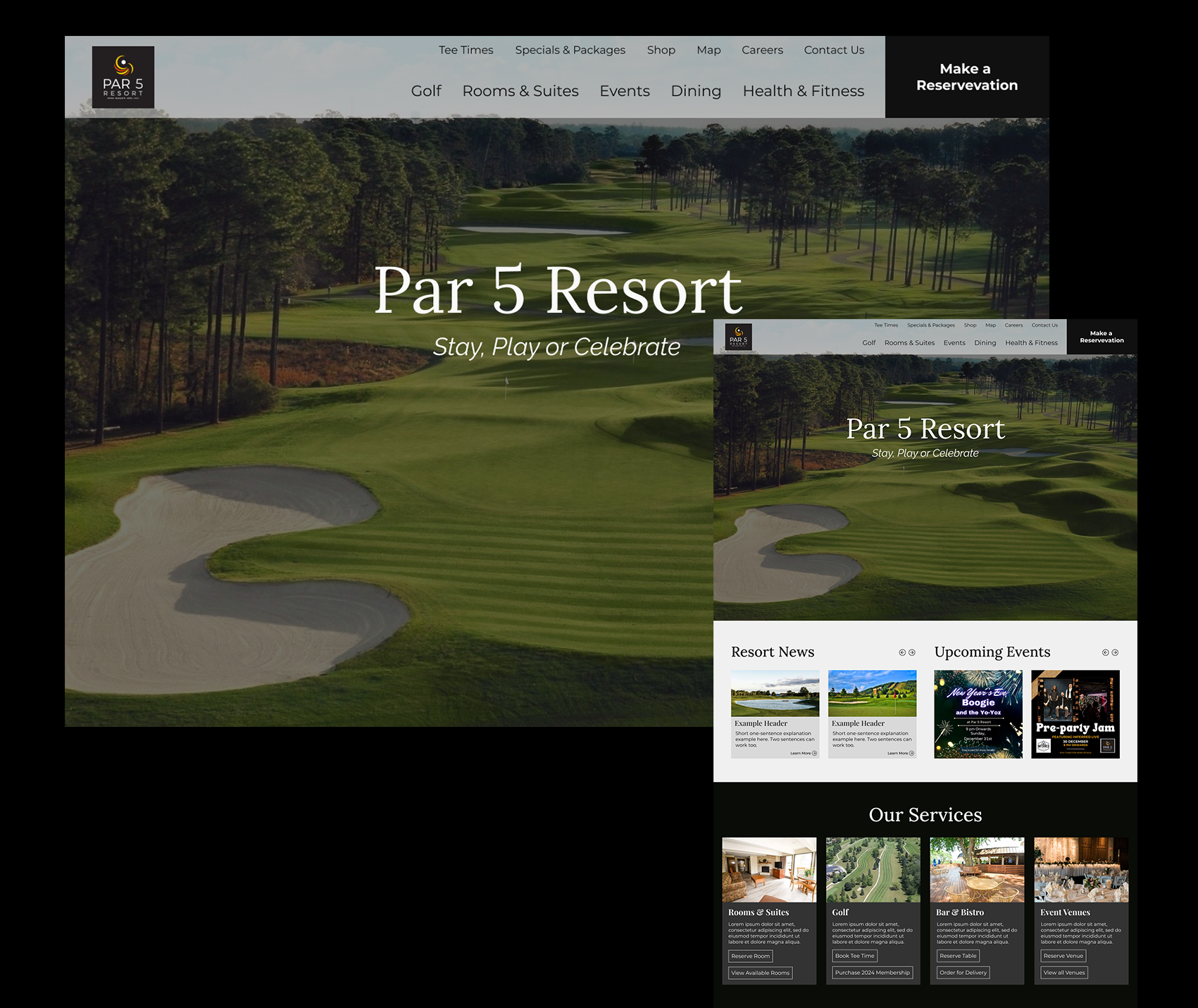
Initial Wireframe
Outcome & Current Impact
Enabled direct bookings, event RSVPs, and merchandise sales
Reduced reliance on third-party platforms
Improved visibility into user behavior and conversion paths
Positioned the resort for scalable digital growth
Status: Ongoing project with continuous iteration and optimization
What This Case Study Demonstrates
End-to-end redesign ownership on a live product
Strong UX judgment balancing brand and conversion
Ability to modernize legacy digital experiences
Designing within real-world platform constraints
Iterative improvement rather than “one-and-done” delivery
What I Learned
How to translate user research directly into revenue-driving features
The importance of UX clarity in hospitality conversion funnels
How to design effectively within platform limitations
How ongoing ownership improves UX outcomes over time